
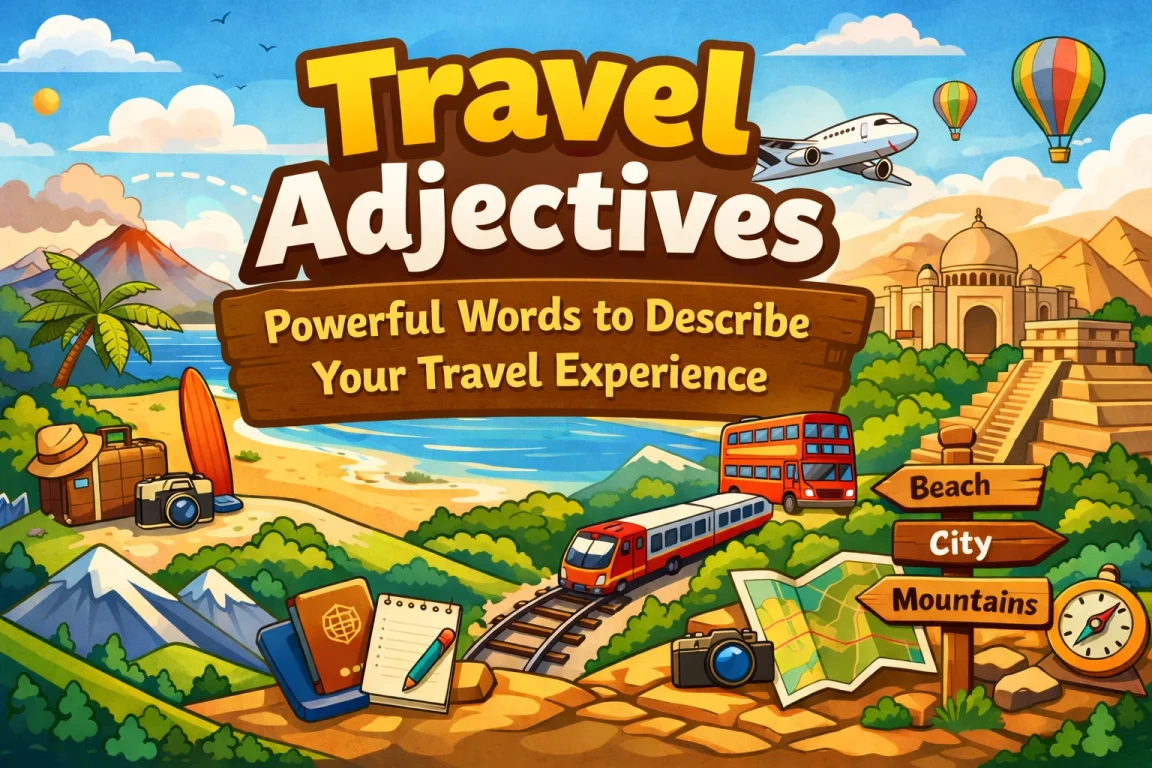
Travel adjectives are essential words that help you describe trips, vacations, and travel experiences clearly. Using the right adjectives makes your travel stories more interesting, expressive, and easy for others to understand.
Whether you want to talk about a relaxing vacation, an adventurous journey, or a memorable tour, this guide will teach you the most useful travel adjectives, along with examples and vocabulary that every traveler and English learner should know.
What Are Travel Adjectives?
Travel adjectives are descriptive words we use to talk about travel, trips, and experiences. They help us explain how a place feels, how a trip was, or how we felt while traveling.
Instead of saying only “I had a trip”, travel adjectives allow us to say:
- I had an amazing trip.
- It was a relaxing vacation.
- The journey was long but exciting.
Travel adjectives are commonly used to describe:
- A travel experience
- A vacation or holiday
- A tour or journey
- Feelings while traveling
They are very useful for travelers, English learners, and anyone who wants to speak or write about travel more clearly.
Using the right adjectives makes your travel stories more interesting and helps others understand your experience better.
Common Adjectives for Traveling and Vacation
When talking about trips and holidays, using the right adjectives for traveling and adjectives for vacation makes your English more natural and expressive. These adjectives help describe places, activities, and feelings during travel.
Adjectives for Traveling
- Exciting – Traveling to a new country is exciting.
- Long – It was a long journey.
- Comfortable – The flight was comfortable.
- Tiring – The trip was tiring but fun.
- Smooth – The travel experience was smooth.
For a complete list of travel words and practice exercises, visit The Ultimate Travel Vocabulary Guide: 107 Words, Phrases & Practice Exercises.
Adjectives for Vacation
- Relaxing – We had a relaxing vacation.
- Peaceful – The beach was peaceful.
- Fun – It was a fun holiday.
- Memorable – The vacation was memorable.
- Perfect – It was a perfect getaway.
These common travel adjectives are easy to use and very helpful when sharing your travel experiences in English.
To describe flights more clearly, you can also learn useful verbs in Master 15 Travel Verbs for Flying: Easy Guide for Beginners.
Adjectives to Describe a Travel Experience
Using the right adjectives to describe a travel experience helps you express how your trip felt and what made it special. These adjectives are often used when sharing stories, writing reviews, or talking about past trips.
Positive Travel Experience Adjectives
- Amazing – The trip was amazing.
- Unforgettable – It was an unforgettable experience.
- Enjoyable – The tour was enjoyable.
- Inspiring – The journey was inspiring.
- Rewarding – Traveling alone was rewarding.
Neutral or Mixed Experience Adjectives
- Challenging – The travel experience was challenging.
- Busy – It was a busy trip.
- Unexpected – We had some unexpected moments.
Negative Travel Experience Adjectives
- Stressful – The journey was stressful.
- Disappointing – The tour was disappointing.
- Exhausting – The long trip was exhausting.
These adjectives allow you to clearly explain your travel experience and help listeners or readers understand your feelings better.
If you want to practice these adjectives in real situations, check 100 Travel Questions and Answers Every Beginner Should Know.
Travel Adjectives Vocabulary for ESL Learners
This section focuses on travel adjectives vocabulary that ESL learners can easily understand and use. These adjectives are common, simple, and very useful in everyday travel conversations.
Places & Destinations
- Beautiful – The city is beautiful.
- Crowded – The market was crowded.
- Quiet – The village is quiet.
- Modern – The hotel is modern.
- Traditional – The town is traditional.
Transportation & Travel
- Fast – The train is fast.
- Slow – The bus was slow.
- Safe – The trip was safe.
- Cheap – Public transport is cheap.
- Expensive – The taxi was expensive.
When traveling to new places, you may also need help with directions—see Asking for and Giving Directions in English: Easy Guide.
Accommodation & Services
- Clean – The room was clean.
- Comfortable – The bed was comfortable.
- Noisy – The hotel was noisy.
- Friendly – The staff was friendly.
These travel adjectives help ESL learners describe places, transportation, and services clearly and confidently.
To improve your travel English even more, check 29 Travel Verbs You Must Know: Easy Guide for Every Traveler.
Adjectives for Travel Lovers and Tour Experiences
If you love traveling, using the right adjectives for travel lovers helps you express your passion and describe tours more vividly. These adjectives are often used when talking about trips, guided tours, and travel adventures.
Adjectives for Travel Lovers
- Adventurous – She is an adventurous traveler.
- Curious – Travel lovers are often curious about new cultures.
- Open-minded – He is open-minded when traveling.
- Passionate – She is passionate about travel.
- Energetic – Travel lovers are usually energetic.
Adjective for Tour Experiences
- Guided – We joined a guided tour.
- Organized – The tour was well-organized.
- Educational – It was an educational tour.
- Scenic – The tour was scenic.
- Enjoyable – The tour experience was enjoyable.
These adjectives help describe both the person who loves travel and the tour experience itself in a clear and natural way.
Adjectives for the Journey of Life
Travel adjectives are not only used for trips and vacations. Many of them also describe the journey of life. People often use travel words to talk about life experiences, growth, and personal change.
- Long – Life is a long journey.
- Challenging – The journey of life can be challenging.
- Meaningful – Every experience makes life meaningful.
- Unpredictable – Life is an unpredictable journey.
- Transformative – Travel can be a transformative experience.
- Rewarding – Helping others makes life rewarding.
These adjectives help express deeper meanings and emotions when talking about life as a journey, not just travel from one place to another.
You can also learn common phrasal verbs used in travel in Essential Travel Phrasal Verbs: The Complete Beginner-Friendly Guide (2026).
Conclusion
Using the right travel adjectives helps you describe trips, vacations, and experiences more clearly and confidently. These adjectives make your English more expressive and help others understand how you feel about a place, a journey, or a travel experience.
As you continue improving your travel English, learning common idioms can also make your speech sound more natural. For more everyday expressions, explore 50 Essential Travel Idioms to Speak Like a Native (2026 Guide) and take your travel conversations to the next level.
Start using these adjectives and expressions today, and your travel stories will become clearer, richer, and more engaging.