
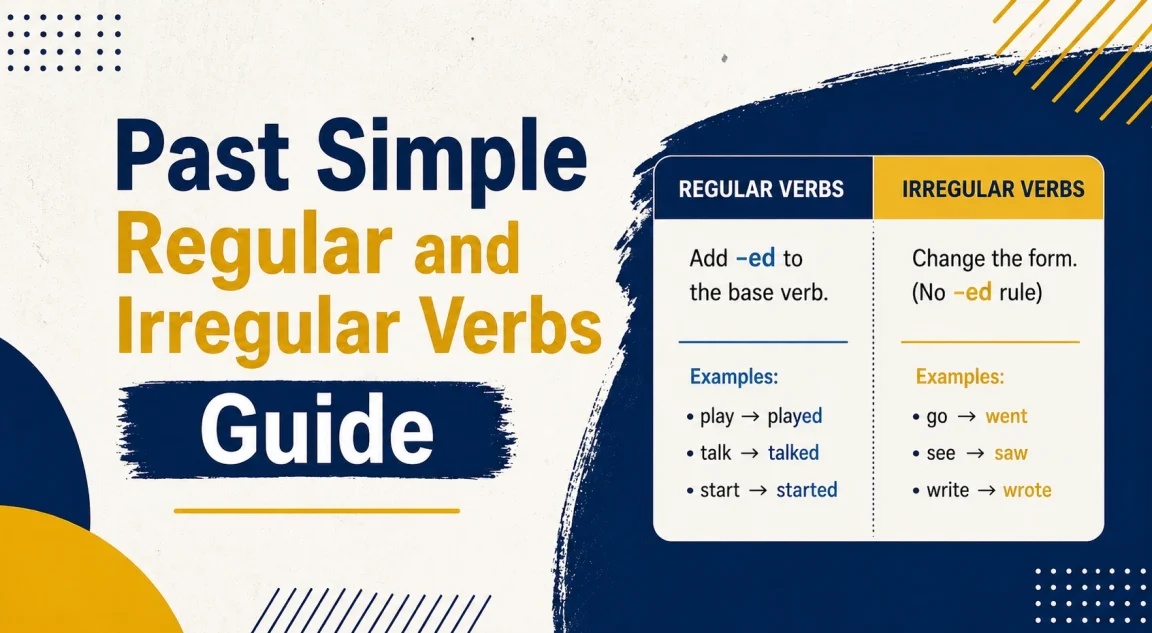
Understanding past simple regular and irregular verbs is the key to speaking about past events correctly and confidently. In this guide, you’ll learn the rules, discover useful verb lists, and see clear examples that make grammar easier to remember and use every day.
What Are Past Simple Regular and Irregular Verbs?
The past simple regular and irregular verbs are the verb forms we use to talk about completed actions in the past.
Some verbs follow a clear rule by adding -ed, while others change in different ways and must be memorized.
Examples:
- Regular verb: work → worked
- Regular verb: play → played
- Irregular verb: go → went
- Irregular verb: see → saw
Understanding both types is essential for speaking and writing correctly in the past simple tense.
If you want to see these verbs in full sentences, read our guide on Simple Past Tense Examples for more real-life usage.
The Difference Between Regular and Irregular Verbs
The main difference is how the verb changes from present to past.
Regular Verbs
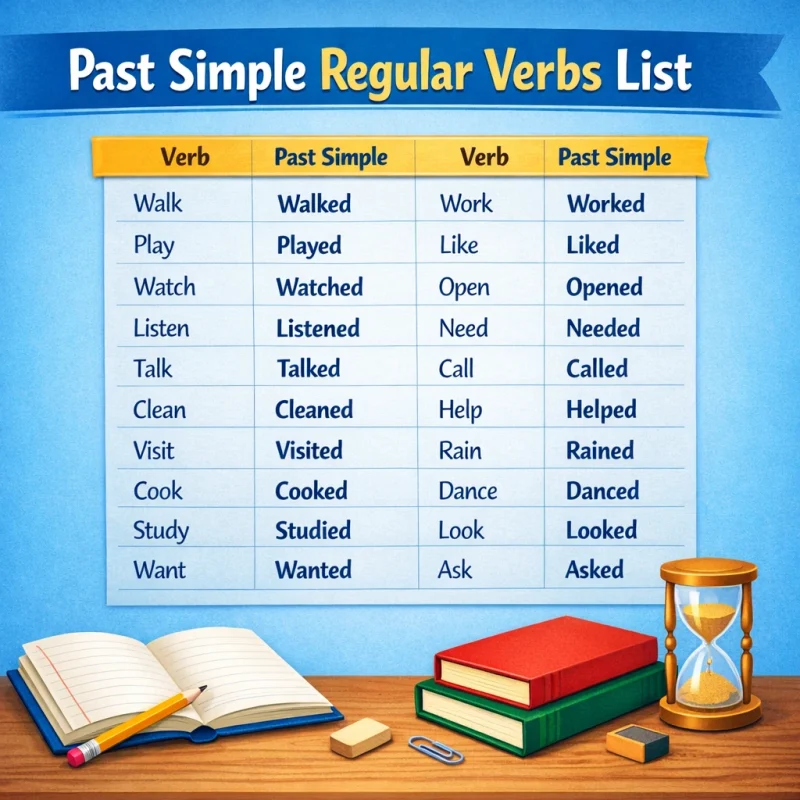
Regular verbs follow a simple pattern: add -ed or -d to the base verb.
Examples:
- clean → cleaned
- visit → visited
- live → lived
Irregular Verbs
Irregular verbs do not follow one fixed rule. Their past forms change in different ways.
Examples:
- eat → ate
- take → took
- buy → bought
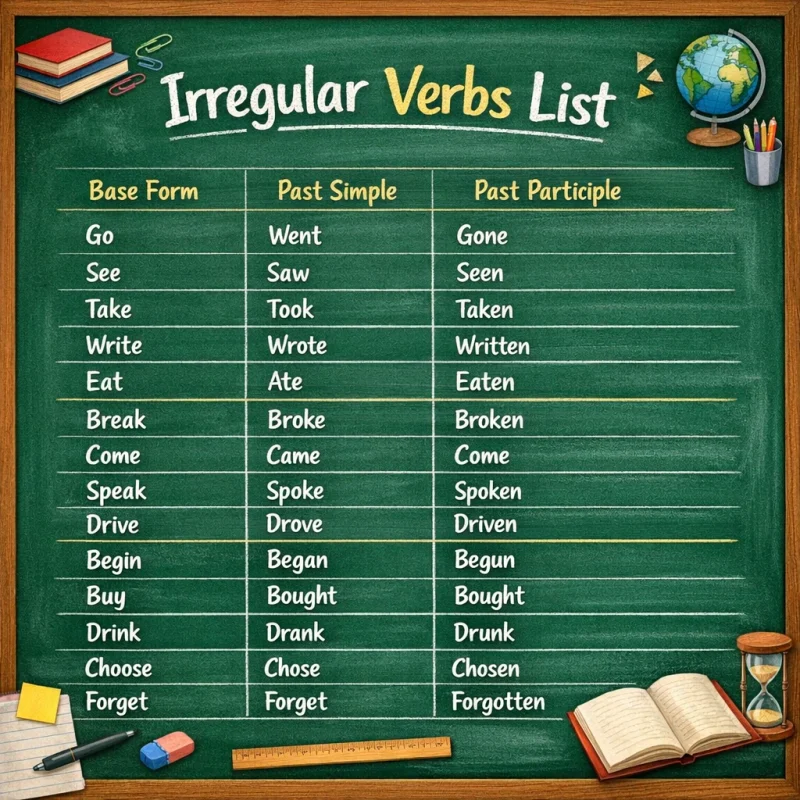
Because irregular verbs have no single pattern, the best way to learn them is through practice and repetition.
Past Simple Regular Verbs
Past simple regular verbs are the easiest verbs to learn because they follow clear spelling rules in the past tense.
Once you understand these patterns, you can create many correct sentences with confidence.
How to Form Regular Verbs in the Past
Most regular verbs form the past tense by adding -ed to the base verb.
Examples:
- work → worked
- play → played
- clean → cleaned
Some verbs need small spelling changes:
1. Verbs ending in -e → add -d
- live → lived
- move → moved
2. Verbs ending in consonant + y → change y to i and add -ed
- study → studied
- carry → carried
3. Short verbs ending in consonant-vowel-consonant → double the last letter + -ed
- stop → stopped
- plan → planned
Learning these simple rules will help you use the simple past tense regular verbs correctly in writing and speaking.
Past Simple Regular Verbs Examples
Here are useful past simple regular verbs examples in sentences:
- I worked late yesterday.
- She played tennis after school.
- They cleaned the house this morning.
- We lived in London for two years.
- He studied for the exam last night.
- I carried the bags upstairs.
- She stopped the car quickly.
- They planned a surprise party.
- We visited our friends last weekend.
- He moved to a new apartment.
If you want to practice these verbs in exercises, check our full guide on Past Simple Exercises for more grammar practice.
Past Simple Regular Verbs List
A strong past simple regular verbs list can help you build vocabulary faster and use common verbs correctly in daily conversations.
The more regular verbs you know, the easier it becomes to speak about past events naturally.
Common Regular Verbs You Should Know
Here is a useful list of common regular verbs in the base form and past simple form:
| Base Verb | Past Simple |
|---|---|
| work | worked |
| play | played |
| clean | cleaned |
| visit | visited |
| watch | watched |
| help | helped |
| open | opened |
| close | closed |
| call | called |
| live | lived |
| move | moved |
| study | studied |
| carry | carried |
| travel | traveled |
| finish | finished |
| start | started |
| need | needed |
| cook | cooked |
| wash | washed |
| walk | walked |
Try to learn five verbs at a time and use each one in your own sentence. This simple habit will improve both grammar and vocabulary quickly.
Simple Past Irregular Verbs
Simple past irregular verbs are common in everyday English, so learning them is essential for speaking naturally.
Unlike regular verbs, they do not follow one fixed rule, which means their past forms must be learned through practice.
How Irregular Verbs Change
Irregular verbs change in different ways when used in the past simple tense.
1. Complete change
- go → went
- see → saw
- take → took
2. Vowel change
- drink → drank
- sing → sang
- begin → began
3. No change
- put → put
- cut → cut
- hit → hit
4. Different ending
- buy → bought
- teach → taught
- bring → brought
Because there is no single pattern, repetition and sentence practice are the best ways to remember them.
Most Common Irregular Verbs List
Here is a useful irregular verbs list with common verbs you will use often:
| Base Verb | Past Simple |
|---|---|
| be | was / were |
| go | went |
| have | had |
| do | did |
| see | saw |
| come | came |
| get | got |
| make | made |
| take | took |
| eat | ate |
| drink | drank |
| write | wrote |
| speak | spoke |
| buy | bought |
| bring | brought |
| give | gave |
| find | found |
| think | thought |
| know | knew |
| leave | left |
To see these verbs in context, read our guide on Past Simple Negative and learn how irregular verbs are used in negative sentences.
Common Mistakes with Regular and Irregular Verbs
Many learners understand the rules but still make mistakes when using past verbs in real sentences.
By learning these common errors, you can improve faster and use English more accurately.
Spelling Errors with -ed
Regular verbs are simple, but spelling changes often cause mistakes.
Correct:
- study → studied
- stop → stopped
- live → lived
Incorrect:
- study → studyed
- stop → stoped
- live → liveed
Remember these rules:
- Change y to i before -ed
- Double the final consonant in some short verbs
- Add only -d after verbs ending in e
Using the Wrong Past Form
Another common mistake is using a regular ending with irregular verbs or choosing the wrong past form.
Correct:
- go → went
- buy → bought
- eat → ate
Incorrect:
- go → goed
- buy → buyed
- eat → eated
The best way to avoid this mistake is to review common irregular verbs regularly and use them in your own sentences.
Practice Tips to Memorize Verbs Faster
Learning verbs becomes much easier when you use the right study methods consistently.
These simple habits can help you remember both regular and irregular verbs faster.
Daily Methods That Really Work
1. Learn in Small Groups
Study 5 to 10 verbs at a time instead of trying to memorize a long list in one day.
2. Use Your Own Sentences
Create personal examples with each verb.
- I went to the gym yesterday.
- She cleaned her room.
3. Review Every Day
Spend five minutes reviewing old verbs before learning new ones.
4. Practice Speaking Out Loud
Say the verb forms aloud:
- go, went
- buy, bought
- work, worked
5. Use Exercises Regularly
Practice is the fastest way to remember forms and patterns. You can improve faster with our full guide on Past Simple Exercises for extra activities and review.
Small daily practice sessions are more effective than long study sessions once a week.
Conclusion
Mastering past simple regular and irregular verbs becomes much easier when you know the patterns and practice often. Learn regular verb rules, review common irregular verbs, and use them in real sentences to build stronger grammar skills and speak English with confidence.