

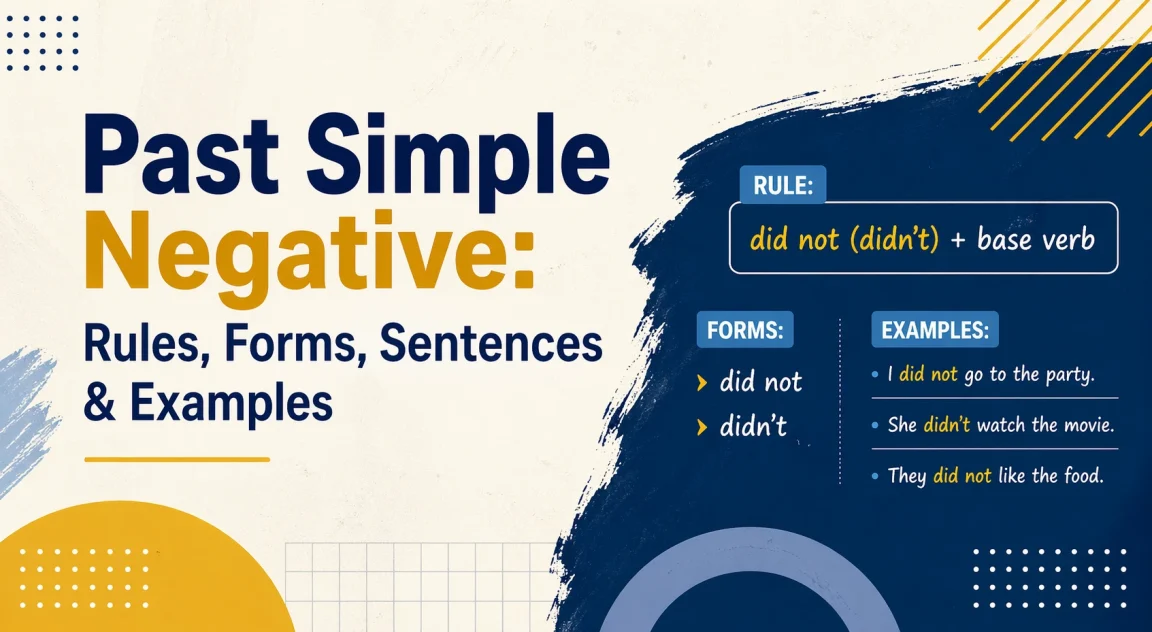
Learning the past simple negative is essential if you want to express what did not happen in the past clearly and correctly.
In this guide, you will discover simple rules, common structures, and easy examples to help you use the negative form with confidence.
What Is Past Simple Negative?
The past simple negative is used to talk about actions that did not happen in the past.
It is formed with did not (didn’t) + base verb, and it is one of the most important grammar structures for everyday English communication.
Examples:
- I didn’t go to work yesterday.
- She didn’t call me last night.
- They didn’t finish the project on time.
If you are new to this tense, you can also read our guide on Simple Past Tense Examples to see how positive and negative forms work in real sentences.
When Do We Use the Negative Form?
We use the negative form when we want to say that something was not true, did not happen, or was not completed in the past.
Common situations include:
1. Actions that never happened
- I didn’t see him at the party.
- We didn’t travel last summer.
2. Refusing or choosing not to do something
- She didn’t answer the phone.
- He didn’t join the meeting.
3. Describing past plans that failed
- They didn’t arrive on time.
- I didn’t finish my homework.
Learning when to use the negative form will help you speak more naturally and avoid common grammar mistakes.
Past Simple Negative Form
Understanding the past simple negative form is easy once you learn the basic structure.
In most sentences, you only need did not (didn’t) followed by the base form of the verb.
How to Use Did Not (Didn’t)
Use this formula:
Subject + did not (didn’t) + base verb
Examples:
- I didn’t watch TV last night.
- She didn’t visit her friend yesterday.
- They didn’t play football after school.
- We didn’t arrive late.
- He didn’t call me back.
You can use did not in formal writing and didn’t in everyday conversation. Both forms have the same meaning.
If you want to practice this structure, check our full guide on Past Simple Exercises for extra examples and activities.
Verb Rules After Didn’t
One of the most common mistakes is using the past form of the verb after didn’t.
After didn’t, always use the base verb, not the past verb.
Correct:
- She didn’t go to school.
- I didn’t eat breakfast.
- They didn’t see the message.
Incorrect:
- She didn’t went to school.
- I didn’t ate breakfast.
- They didn’t saw the message.
Remember: did already shows the past, so the main verb stays in its base form.
Simple Past Negative Sentences
Using simple past negative sentences in real situations helps you speak more naturally and express what did not happen in the past.
The more examples you read, the easier it becomes to use this structure correctly in conversation and writing.
Everyday Examples
Here are common examples of negative simple past sentences:
- I didn’t wake up early today.
- She didn’t cook dinner last night.
- They didn’t visit us last weekend.
- We didn’t watch the game yesterday.
- He didn’t finish his homework.
- I didn’t buy anything at the store.
- She didn’t answer my message.
- They didn’t travel last summer.
- We didn’t stay at home all day.
- He didn’t clean his room.
These examples show how native speakers often use the negative form in daily life.
Questions vs Negative Sentences
Many learners confuse negative sentences with questions because both use did.
The difference is the word order.
Negative Form:
Subject + didn’t + base verb
- She didn’t call me.
- They didn’t come early.
Question Form:
Did + subject + base verb?
- Did she call you?
- Did they come early?
Common Mistakes in Negative Simple Past
Many learners understand the rule but still make small mistakes when using the negative simple past.
By recognizing these common errors early, you can improve your grammar faster and speak with more confidence.
Using the Past Verb After Didn’t
This is the most common mistake.
After didn’t, the main verb must stay in the base form.
Correct:
- I didn’t go to school.
- She didn’t eat breakfast.
- They didn’t see the email.
Incorrect:
- I didn’t went to school.
- She didn’t ate breakfast.
- They didn’t saw the email.
Remember: didn’t already shows the past, so the verb does not change.
Confusing Was/Were with Didn’t
Another common mistake is using didn’t with sentences that need was or were.
For the verb to be, use was not (wasn’t) or were not (weren’t) instead of didn’t.
Correct:
- She wasn’t tired yesterday.
- They weren’t at home last night.
- I wasn’t ready for the test.
Incorrect:
- She didn’t tired yesterday.
- They didn’t at home last night.
- I didn’t ready for the test.
Use didn’t with action verbs, but use wasn’t / weren’t with the verb to be.
Mastering the past simple negative becomes easy once you understand the basic structure and avoid common mistakes. With regular practice and clear examples, you can quickly improve your accuracy and use English more naturally in everyday situations.