
Looking for simple and clear greeting words in English? This beginner-friendly guide gives you common, formal, and friendly greeting vocabulary in one place—perfect for quick learning, daily practice, and confident communication from the first word you say.
1. What Are Greeting Words in English?
Greeting words are simple English words used to say hello or welcome someone. They are usually the first word spoken in a conversation and help create a friendly or polite start.
- Greeting words are short and easy
- They are used alone, not as full sentences
- They are common in daily English for beginners
They are different from full expressions and phrases. If you want to see how greeting words become complete greetings, you can also read 10 Different Greetings in English for Everyday Conversations.
2. Common Greeting Words Used Every Day
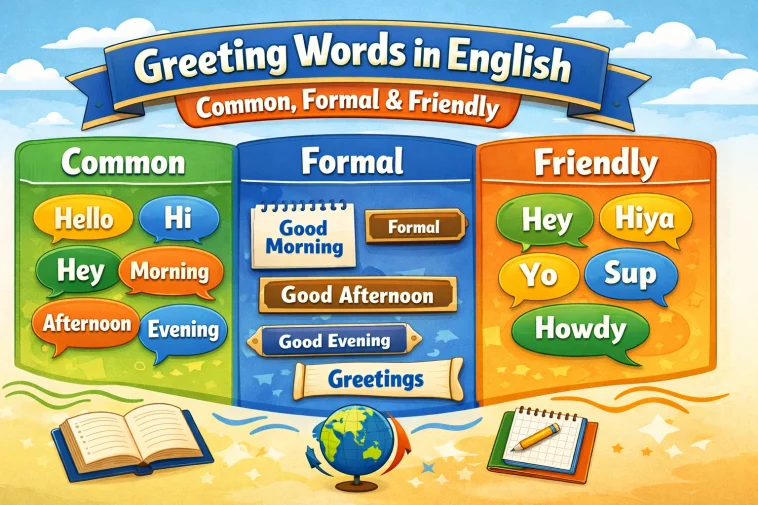
These are the most common greeting words in English. They are easy, safe, and used by people of all ages in daily life.
- Hello
A universal greeting word used in almost any situation. - Hi
A short and friendly greeting, common in casual conversations. - Hey
An informal greeting used with friends or people you know well. - Morning
A relaxed way to say “Good morning,” often used at the start of the day. - Afternoon
Used as a short greeting later in the day, usually in casual settings. - Evening
A polite greeting word used after sunset, slightly more formal than “Hi.”
These greeting words are often the base of longer expressions. To see how they are used in full sentences and real conversations, you can read English Phrases for Daily Use: Speak Confidently Every Day.
3. Formal Greeting Words in English
These greeting words are polite and respectful. They are used in work, school, or official situations where a formal tone is important.
- Good morning
A formal greeting used before noon in professional or academic settings. - Good afternoon
A polite greeting used after noon, common in offices and formal emails. - Good evening
A respectful greeting used in the evening, often in meetings or events. - Greetings
A very formal word, mostly used in written communication. - Welcome
Used to politely receive guests in formal or official places.
These words are safe choices when you want to sound professional. For more structured examples and correct professional usage, see Formal Greetings in English.
4. Friendly and Casual Greeting Words
These greeting words sound warm and relaxed. They are used with friends, family, and people you know well.
- Hey
A very common friendly greeting in everyday spoken English. - Hiya
A cheerful and informal greeting, often used in casual conversations. - Yo
A very informal greeting, mostly used among close friends. - Sup
Short for “What’s up,” used in relaxed and friendly situations. - Howdy
A casual and friendly greeting, more common in American English.
These greeting words help you sound natural in informal conversations. To learn how to use friendly greetings confidently without sounding awkward, check Greeting Phrases in English: Speak Naturally and Confidently.
Conclusion
Learning basic greeting words is the first step to communicating confidently in English. By understanding common, formal, and friendly greeting vocabulary, you can choose the right word for every situation and avoid social mistakes. To see how these greeting words change between professional and casual contexts, read Formal and Informal Greetings in English: How to Switch Naturally and strengthen your everyday communication skills.
For a full overview of greetings and when to use them, see our comprehensive guide to types of greetings.