
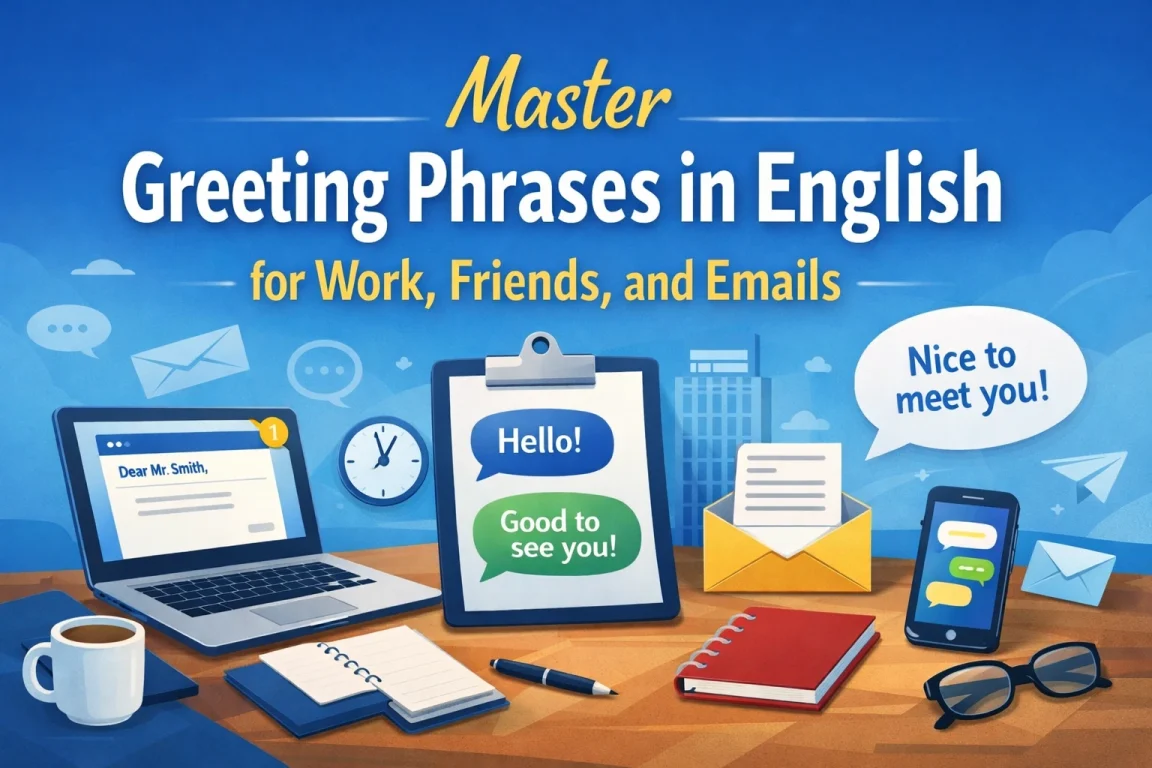
Learning the right greeting phrases in English can make your conversations smoother and more natural. Whether it’s at work, with friends, or in emails, using the right greetings helps you sound confident and polite. This guide teaches formal, friendly, and email greetings so you can communicate like a native speaker in any situation.
1. Formal Greetings in English for Work and Professional Settings
Formal greetings in English are used in professional situations such as offices, meetings, interviews, and business emails. These greeting phrases sound polite, respectful, and professional, helping you make a good first impression and avoid sounding too casual at work.
Below are common formal greetings in English, with their meaning, correct context, and a natural response.
1. Good morning
- Meaning: A polite greeting used before noon
- When to use: At work, meetings, or professional settings in the morning
- Greeting & Response:
- Greeting: “Good morning, Mr. Smith.”
- Response: “Good morning.”
2. Good afternoon
- Meaning: A formal greeting used after noon
- When to use: Offices, business calls, or formal conversations
- Greeting & Response:
- Greeting: “Good afternoon, everyone.”
- Response: “Good afternoon.”
3. Good evening
- Meaning: A polite greeting used in the evening
- When to use: Formal events, dinners, or late meetings
- Greeting & Response:
- Greeting: “Good evening, ladies and gentlemen.”
- Response: “Good evening.”
4. Hello, how are you?
- Meaning: A polite and neutral greeting
- When to use: Professional but friendly situations
- Greeting & Response:
- Greeting: “Hello, how are you?”
- Response: “I’m doing well, thank you. And you?”
5. Nice to meet you
- Meaning: Used when meeting someone for the first time
- When to use: Job interviews, meetings, introductions
- Greeting & Response:
- Greeting: “Nice to meet you.”
- Response: “Nice to meet you too.”
6. It’s a pleasure to meet you
- Meaning: A more formal version of “Nice to meet you”
- When to use: Very formal or high-level professional settings
- Greeting & Response:
- Greeting: “It’s a pleasure to meet you.”
- Response: “The pleasure is mine.”
7. How have you been?
- Meaning: Asking how someone has been recently
- When to use: Professional relationships you already know
- Greeting & Response:
- Greeting: “How have you been?”
- Response: “I’ve been well, thank you.”
8. Good to see you again
- Meaning: Greeting someone you have met before
- When to use: Returning clients, colleagues, repeat meetings
- Greeting & Response:
- Greeting: “Good to see you again.”
- Response: “Good to see you too.”
Tip to Sound Native-Like
In professional English, tone matters more than the greeting itself. Speak clearly, smile, and avoid slang. Using these formal greetings in English helps you sound confident, respectful, and professional—just like a native speaker.
2. Friendly Greeting Phrases for Everyday Conversations
Friendly greeting phrases are used in relaxed, everyday situations with friends, classmates, neighbors, or coworkers you know well. These friendly greeting phrases sound warm and natural, helping you connect easily and avoid sounding too formal or distant.
- Hi! How are you?
- Meaning: A friendly and common way to greet someone.
- When to use: Everyday conversations with people you know.
- Greeting & Response:
- Greeting: “Hi! How are you?”
- Response: “I’m good, thanks! How about you?”
- Hey!
- Meaning: A very friendly and casual greeting.
- When to use: Friends, close coworkers, or people your age.
- Greeting & Response:
- Greeting: “Hey!”
- Response: “Hey! What’s up?”
- How’s it going?
- Meaning: Asking how someone is doing in a casual way.
- When to use: Informal situations and friendly conversations.
- Greeting & Response:
- Greeting: “How’s it going?”
- Response: “Pretty good! And you?”
- What’s up?
- Meaning: A very informal greeting meaning “How are you?”
- When to use: Friends or people you know well.
- Greeting & Response:
- Greeting: “What’s up?”
- Response: “Not much. You?”
- How are things?
- Meaning: Asking about someone’s general situation or life.
- When to use: Friendly but slightly more polite conversations.
- Greeting & Response:
- Greeting: “How are things?”
- Response: “All good, thanks!”
- Good to see you!
- Meaning: Showing happiness to meet someone.
- When to use: Friends, coworkers, or people you haven’t seen recently.
- Greeting & Response:
- Greeting: “Good to see you!”
- Response: “Good to see you too!”
- How’s your day going?
- Meaning: Asking about someone’s day so far.
- When to use: Friendly daily conversations.
- Greeting & Response:
- Greeting: “How’s your day going?”
- Response: “It’s going well, thanks!”
- Long time no see!
- Meaning: Greeting someone you haven’t seen for a long time.
- When to use: Informal and friendly situations.
- Greeting & Response:
- Greeting: “Long time no see!”
- Response: “I know! It’s been a while.”
Native-Like Tip
In casual English, the response doesn’t need to be long or detailed. Short, positive answers sound natural. Using these friendly greeting phrases helps you sound relaxed and confident in everyday conversations.
3. Short Friendly Greeting Phrases You Can Use Anytime
Short friendly greeting phrases are perfect for quick interactions when you want to sound polite and natural without starting a long conversation. These short friendly greeting phrases are very common in daily life and are used by native speakers all the time.
- Hi!
- Meaning: A simple and friendly greeting.
- When to use: Any informal situation.
- Greeting & Response:
- Greeting: “Hi!”
- Response: “Hi!”
- Hey!
- Meaning: A casual and friendly greeting.
- When to use: Friends, classmates, or people you know well.
- Greeting & Response:
- Greeting: “Hey!”
- Response: “Hey!”
- Hello!
- Meaning: A neutral and polite greeting.
- When to use: Both formal and informal situations.
- Greeting & Response:
- Greeting: “Hello!”
- Response: “Hello!”
- Morning!
- Meaning: An informal short form of “Good morning.”
- When to use: Casual conversations in the morning.
- Greeting & Response:
- Greeting: “Morning!”
- Response: “Morning!”
- Hi there!
- Meaning: A warm and friendly greeting.
- When to use: Informal and relaxed situations.
- Greeting & Response:
- Greeting: “Hi there!”
- Response: “Hi!”
- Hey there!
- Meaning: A friendly and casual greeting.
- When to use: Informal conversations.
- Greeting & Response:
- Greeting: “Hey there!”
- Response: “Hey!”
- Good to see you!
- Meaning: Showing friendliness and interest.
- When to use: Meeting someone you know.
- Greeting & Response:
- Greeting: “Good to see you!”
- Response: “You too!”
Native-Like Tip
Short greetings are often combined with a smile or friendly tone. Using these short friendly greeting phrases helps you sound natural and confident without overthinking what to say.
4. Informal Greeting Phrases for Friends and Casual Situations
Informal greeting phrases are used with close friends, family members, and people you feel comfortable with. These informal greetings in English sound relaxed and natural, and they help you blend in like a native speaker.
- What’s going on?
- Meaning: A casual way to ask how things are.
- When to use: Friends or people you know well.
- Greeting & Response:
- Greeting: “Hey, what’s going on?”
- Response: “Not much, just relaxing.”
- How’ve you been?
- Meaning: Asking how someone has been recently.
- When to use: Friends you haven’t seen in a while.
- Greeting & Response:
- Greeting: “How’ve you been?”
- Response: “I’ve been good, thanks!”
- What’s new?
- Meaning: Asking if there is any new news or updates.
- When to use: Casual conversations with friends.
- Greeting & Response:
- Greeting: “What’s new?”
- Response: “Not much, same as usual.”
- How’s everything?
- Meaning: Asking about someone’s life in general.
- When to use: Friendly and informal situations.
- Greeting & Response:
- Greeting: “How’s everything?”
- Response: “Everything’s good!”
- What are you up to?
- Meaning: Asking what someone is doing.
- When to use: Friends or casual conversations.
- Greeting & Response:
- Greeting: “What are you up to?”
- Response: “Just working on a project.”
- Hey, stranger!
- Meaning: A playful greeting for someone you haven’t seen in a while.
- When to use: Close friends only.
- Greeting & Response:
- Greeting: “Hey, stranger!”
- Response: “I know! It’s been forever.”
- Look who it is!
- Meaning: A friendly and playful way to greet someone.
- When to use: Informal situations with friends.
- Greeting & Response:
- Greeting: “Look who it is!”
- Response: “Haha, good to see you!”
Native-Like Tip
These informal greeting phrases are about tone, not perfection. Use them with people you know well, and avoid them in professional or formal situations to prevent awkward moments.
5. Greeting Phrases for Emails and Online Communication
Greeting phrases in emails are very important because they set the tone of your message. Choosing the right greeting helps you sound polite, professional, or friendly—depending on who you are writing to.
- Dear [Name],
- Meaning: A very formal and respectful email greeting.
- When to use: Work emails, formal requests, or first contact.
- Greeting & Response:
- Greeting: “Dear Mr. Johnson,”
- Response: “Dear Sarah,”
- Hello [Name],
- Meaning: A neutral and professional greeting.
- When to use: Professional but friendly emails.
- Greeting & Response:
- Greeting: “Hello Anna,”
- Response: “Hello Mark,”
- Hi [Name],
- Meaning: A friendly but still professional greeting.
- When to use: Coworkers, clients you know, or casual work emails.
- Greeting & Response:
- Greeting: “Hi James,”
- Response: “Hi Emily,”
- Good morning / Good afternoon [Name],
- Meaning: A polite greeting based on time of day.
- When to use: Formal or semi-formal emails.
- Greeting & Response:
- Greeting: “Good morning Alex,”
- Response: “Good morning,”
- Hi everyone,
- Meaning: Greeting a group of people.
- When to use: Team emails or group messages.
- Greeting & Response:
- Greeting: “Hi everyone,”
- Response: “Hi,” or no greeting needed
- Dear Sir or Madam,
- Meaning: Very formal greeting when you don’t know the name.
- When to use: Official emails or applications.
- Greeting & Response:
- Greeting: “Dear Sir or Madam,”
- Response: Not usually used in replies
Native-Like Tip
Avoid greetings like “Hey” or “What’s up” in emails unless you know the person very well. Choosing the right greeting phrases in English helps you sound polite and professional online.
6. How to Choose the Right Greeting Phrase (And Avoid Awkward Moments)
Choosing the correct greeting depends on three things: the situation, the relationship, and the medium (spoken or written). Native speakers naturally adjust their greetings, and you can do the same by following a few simple rules.
- Match the formality to the situation
- Use formal greetings in English at work or in emails.
- Use informal greetings only with friends or people you know well.
- Think about your relationship
- New person → polite and neutral greeting.
- Close friend → relaxed and casual greeting.
- Consider spoken vs. written English
- Spoken English allows more casual greetings.
- Written English (especially emails) is usually more formal.
- When in doubt, choose neutral
- Greetings like “Hello” or “Hi” are safe in most situations.
- Avoid translating greetings from your native language
- Some greetings may sound unnatural or awkward in English.
Final Native-Like Advice
Mastering greeting phrases is not about memorizing many expressions—it’s about using the right one at the right time. When you choose greetings carefully, you sound confident, natural, and respectful, just like a native speaker.
See our detailed guide on types of greetings to master both verbal and non-verbal communication in English.
Conclusion
Mastering greeting phrases is a simple but powerful step toward sounding natural and confident in English. By understanding when to use formal greetings, friendly expressions, or email greetings, you can avoid awkward moments and communicate more smoothly in any situation. These greeting phrases in English help you make a strong first impression and interact like a native speaker in both personal and professional contexts.
To continue improving your everyday communication skills, don’t miss our related guide: English Phrases for Daily Use, where you’ll learn practical expressions you can use in real-life conversations every single day.