
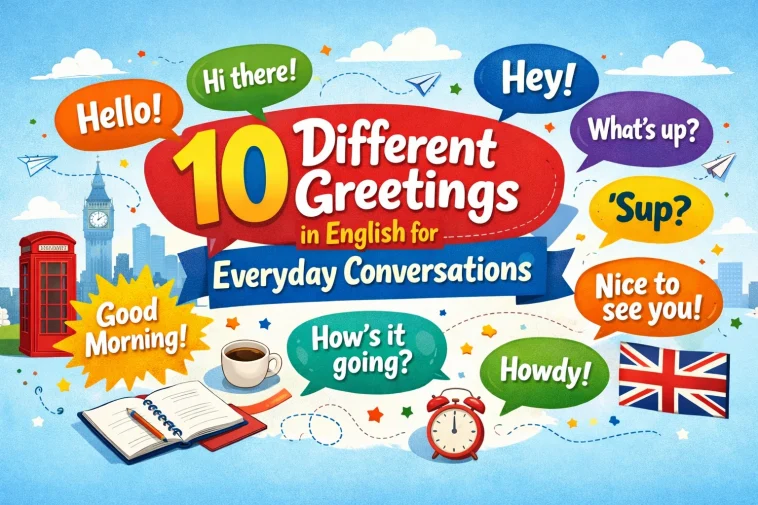
Looking for 10 different greetings you can use in real English conversations? This quick guide gives you simple, practical greeting phrases in English—explained clearly so you know exactly when to use each one and sound confident every day.
Quick Guide to Greeting Phrases in English
Greeting phrases in English are short expressions used to start a conversation politely and naturally. The right greeting depends on who you are talking to and where the conversation happens—for example, at work, with friends, or in daily situations. Understanding this difference helps you sound confident and avoid awkward moments.
If you want a deeper explanation of how greetings change between professional and casual contexts, you can explore Formal and Informal Greetings in English: How to Switch Naturally.
Now, let’s move directly to the main list of 10 different greetings you can use in real life.
10 Different Greetings in English (Formal, Informal, and Daily Use)
- Hello
Meaning: A polite and neutral greeting.
Use: Formal or informal; safe in almost all situations.
Response: Hello! / Hi! - Hi
Meaning: A friendly greeting.
Use: Informal; used with friends, classmates, or coworkers you know.
Response: Hi! - Good morning
Meaning: A polite greeting for the start of the day.
Use: Formal or professional situations, from morning until noon.
Response: Good morning! - Good afternoon
Meaning: A respectful greeting used after noon.
Use: Formal settings such as offices, meetings, or customer service.
Response: Good afternoon! - Good evening
Meaning: A formal greeting used later in the day.
Use: Professional meetings, events, or polite conversations in the evening.
Response: Good evening! - How are you?
Meaning: Asking about someone’s well-being.
Use: Formal or informal conversations.
Response: I’m fine, thank you. And you? - How’s it going?
Meaning: A casual way to ask how someone is.
Use: Informal; used with friends or familiar coworkers.
Response: Good, thanks! / Not bad! - Nice to meet you
Meaning: Expressing pleasure when meeting someone for the first time.
Use: Formal or informal introductions.
Response: Nice to meet you too! - What’s up?
Meaning: A very casual greeting meaning “How are things?”.
Use: Informal only; close friends or peers.
Response: Not much! / All good! - Pleased to meet you
Meaning: A formal expression of respect when meeting someone new.
Use: Professional or academic introductions.
Response: Pleased to meet you as well.
For professional and academic situations, you can explore more examples in Formal Greetings in English.
How to Choose the Right Greeting Words for Each Situation
- Check the context first: Use formal greetings at work, in interviews, or with people you don’t know well.
- Think about your relationship: Informal greeting words are best for friends, classmates, and close coworkers.
- When unsure, stay neutral: Greetings like Hello or Good morning are always safe choices.
- Match the response: Reply with the same level of formality to sound polite and natural.
These simple tips will help you choose the right greeting phrases in English confidently in any situation.
Learning 10 different greetings in English helps you communicate naturally in both formal and informal situations. By choosing the right greeting words, you avoid awkward moments and sound more confident in daily conversations. To expand your everyday communication skills, explore English Phrases for Daily Use: Speak Confidently Every Day and keep building your English step by step.