

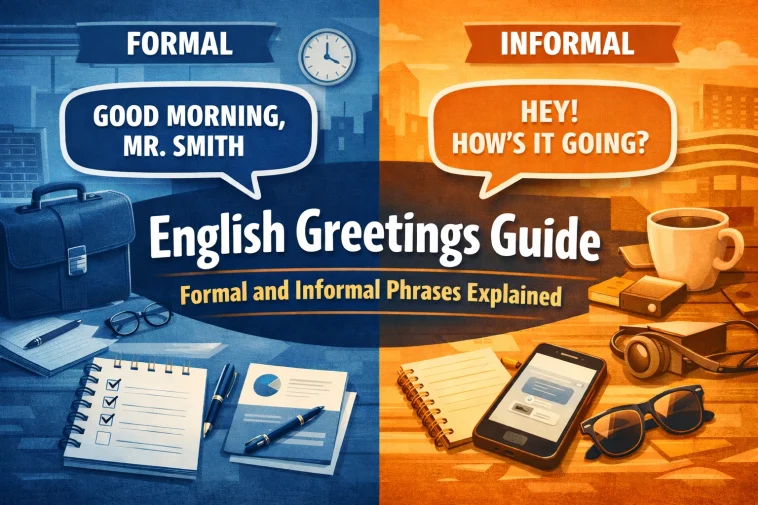
Learning the difference between formal and informal greetings in English is essential for avoiding social mistakes and communicating naturally. Whether in the workplace, classroom, or social events, knowing which greeting to use and when helps you sound confident, polite, and professional.
This guide compares common greetings, provides real-life scenarios, and gives tips to switch smoothly between formal and informal English.
1. Understanding the Difference: Register & Tone
When learning English, one of the most important skills is knowing the difference between formal and informal greetings in English. The key lies in register and tone:
- Register refers to the level of formality in your language. Formal greetings are used in professional, academic, or official settings, while informal greetings are suitable for friends, classmates, or casual situations.
- Tone reflects how polite, friendly, or casual your words sound. Even the same greeting can feel different depending on your tone and body language.
Example:
- Formal: “Good morning, Ms. Johnson.” → Polite and professional
- Informal: “Hey! How’s it going?” → Friendly and casual
Understanding this difference helps you avoid awkward social situations and communicate with confidence, whether in a meeting, classroom, or casual chat.
For a deeper guide on using formal greetings confidently in professional and academic contexts, see Formal Greetings in English: Professional Phrases for Work and Academia.
2. Formal vs. Informal Greetings: Common Pairs
Understanding the difference between formal and informal greetings in English becomes easier when you see them in pairs. Below are common formal greetings with their informal counterparts, along with guidance on who to say them to and in which situations:
- Good morning, Mr. Smith → Morning!
- Who: Colleagues you know well
- When: Casual morning conversation at work
- Good afternoon, Ms. Brown → Hi! How’s it going?
- Who: Friends, classmates, or familiar coworkers
- When: Afternoon meetings or informal chats
- How do you do? → How’s it going?
- Who: New professional contacts (formal) vs. friends (informal)
- When: First-time meetings / casual encounters
- Pleased to meet you → Nice to see you!
- Who: Professional contacts vs. close acquaintances
- When: Introductions at work / social gatherings
- It’s a pleasure to meet you → Great to see you!
- Who: Formal contacts vs. friends or familiar colleagues
- When: Business meetings / informal catch-ups
- Dear Mr. Johnson → Hey John!
- Who: Formal written communication vs. casual emails or texts
- When: Professional emails / casual messages
- Thank you for your time → Thanks!
- Who: Supervisors, clients, or professional contacts vs. friends
- When: Formal appreciation / casual gratitude
- I look forward to working with you → Can’t wait to work with you!
- Who: Colleagues or project partners
- When: Formal collaboration vs. friendly team discussion
Pro Tip:
- Formal greetings always include titles and last names; informal greetings often use first names or drop titles completely.
- Tone is as important as words: a friendly, relaxed tone suits informal greetings, while polite, controlled tone is required for formal interactions.
To learn more about using both formal and informal greetings naturally, see Greeting Phrases in English: Speak Naturally and Confidently.
3. Real-Life Scenarios: When to Use Each Greeting
Knowing the right greeting to use depends on the situation, your relationship with the person, and the context. Here are realistic scenarios to help you switch naturally between formal and informal greetings:
Scenario 1: Workplace Meetings
- Formal: “Good morning, Mr. Patel. It’s a pleasure to meet you.”
- Use: When meeting a new manager, client, or executive for the first time.
- Informal: “Morning, Alex! How’s it going?”
- Use: When greeting a teammate you know well in a casual office setting.
Scenario 2: Academic Settings
- Formal: “Dear Professor Adams, thank you for meeting with me today.”
- Use: Email or in-person meetings with professors, lecturers, or academic advisors.
- Informal: “Hi, Sarah! Nice to see you!”
- Use: Greeting classmates or group project members you know personally.
Scenario 3: Social or Networking Events
- Formal: “It’s a pleasure to meet you, Ms. Thompson.”
- Use: Professional networking events or formal social gatherings where etiquette matters.
- Informal: “Hey! Great to see you!”
- Use: Casual parties, friend meet-ups, or familiar colleagues outside the office.
Scenario 4: Emails and Written Communication
- Formal: “Dear Dr. Wilson, I hope this message finds you well.”
- Use: Sending professional emails, job applications, or official letters.
- Informal: “Hi Tom, just checking in about the project.”
- Use: Emails or messages to colleagues you already know or informal team communication.
Key Takeaways:
- Formal greetings show respect, professionalism, and careful attention to context.
- Informal greetings express friendliness and approachability without being rude.
- Choosing the right greeting builds confidence and avoids social embarrassment.
4. Tips for Switching Between Formal and Informal Greetings Confidently
Switching between formal and informal greetings requires awareness of context, audience, and tone. Here are practical tips to help you communicate naturally:
- Assess the Situation
- Ask yourself: Is this a professional, academic, or social setting?
- Use formal greetings for interviews, emails to supervisors, or official meetings.
- Use informal greetings with friends, classmates, or familiar colleagues.
- Consider Your Relationship with the Person
- If you know the person well, informal greetings are acceptable and make the conversation friendly.
- With new contacts, supervisors, or senior professionals, stick to formal greetings until invited to be casual.
- Observe Titles and Names
- Formal greetings usually include titles (Mr., Ms., Dr., Professor) and last names.
- Informal greetings can drop titles and use first names or nicknames.
- Mirror the Other Person’s Tone
- If someone greets you formally, respond formally.
- If someone greets you casually in an informal setting, you can respond in kind.
- Practice Flexible Phrases
- Some greetings can work in both formal and informal settings with slight adjustments:
- “Hello, Mr. Lee” → formal
- “Hello, Lee!” → informal
- Adjust tone, body language, and word choice according to the context.
- Some greetings can work in both formal and informal settings with slight adjustments:
- Listen and Learn
- Pay attention to how native speakers switch between formal and informal greetings.
- Notice when they add a friendly tone without losing professionalism.
Pro Tip: Confidence comes from knowing the rules and practicing them. By mastering these distinctions, you’ll avoid awkward situations and communicate naturally in any English-speaking environment.
To continue improving your everyday greetings and conversational confidence, see English Phrases for Daily Use: Speak Confidently Every Day.
Mastering formal and informal greetings in English allows you to adapt to any social or professional situation with confidence. By understanding the tone, context, and audience, you can greet people politely, avoid awkward moments, and communicate like a native speaker.